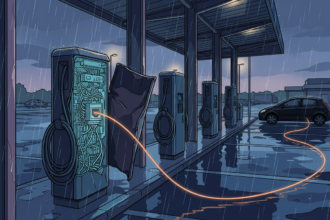

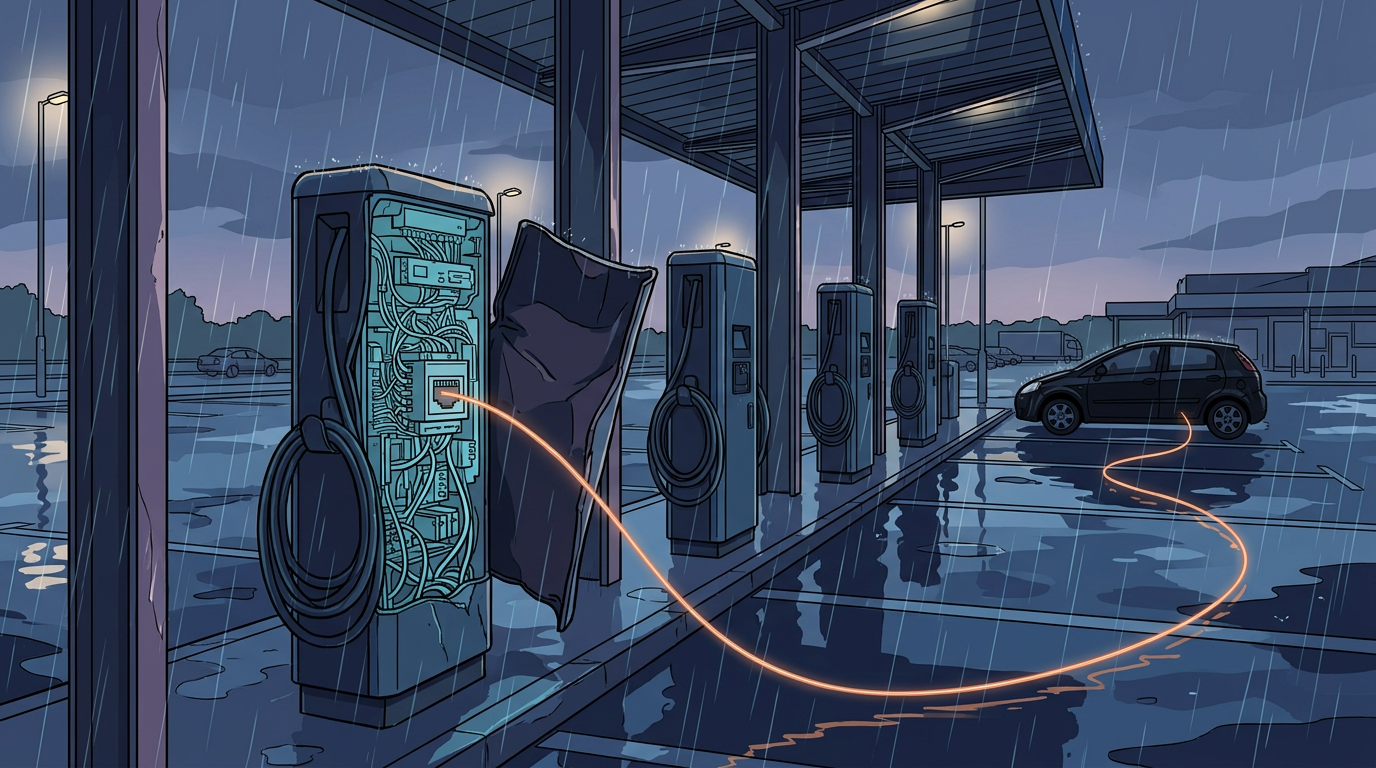
Department for Transport documents concede that Britain’s public charging estate carries no specific cybersecurity mandate, even as ministers frame hostile states as a live risk.
The gap covers roughly 125,000 public charge points. Home units, of which there are about 1.4 million, already fall under the 2021 Smart Charge Points Regulations. The public side of the network was never brought into line.
What the department’s own papers say
Officials warn of direct attacks on charge points and note that a compromised unit could be manipulated to reach other parts of the charging network. No uniform baseline exists to stop either.
Graeme Downie, the Labour MP for Dunfermline and Dollar who chairs the Coalition on Secure Technology, told The i Paper that ministers should be candid about the threat. He described dispersed, slow-burning disruption as the shape a state attack would take, arriving first in rural areas or on home chargers where nobody reads it as anything but a fault.
Practitioners see a fleet-wide target
Eric Escobar, a principal consultant at Sophos, has run authorised tests against chargers. He said a determined attacker could affect an entire fleet, and that motives diverge: a state may want units offline, a stalker may want to learn when a resident is home, and others may want the payment rail or the price of the electricity itself.
Recent weeks sharpened the context. Refrigeration controllers at hospitals and supermarkets across Britain and Europe were attacked to spoil food and blood products.
The consultation on a public-charger baseline closes on 20 December. New hardware would face the rules; existing posts would not need retrofitting. Mike Hawes of the SMMT backed the move, saying public infrastructure should match the standards already applied to vehicles and private chargers.