


Officers stopped a Virginia motorist on an interstate last year over a claimed lane violation. Only once she reached the shoulder did the real reason emerge: software had flagged her journey.
Jay Stanley of the American Civil Liberties Union published her account on October 26 in an ACLU commentary covered by Gizmodo. The driver, Grace Knowles, was headed from New Orleans toward Florida and spoke publicly for the first time. She produced a whiskey museum pamphlet to back up her route, and the officer then identified himself as an FBI agent working trafficking cases.
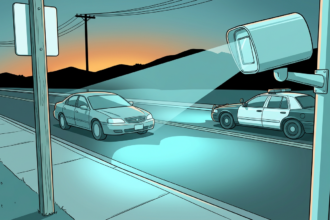
He asked her to sit in his patrol car and turned the screen toward her. A map of the continental United States showed rings where her plate had been read, at spots she never knew existed. Cameras on highway signs had logged each pass.
Pretext stops get a technical layer
Stanley calls that kind of encounter routine now. An officer invents a minor infraction, then detains the occupants over a suspicion generated by software. Police slang for them runs to whisper stops and intel stops.
None of this is new. What shifted is volume and the deference given to software. Earlier examples Stanley documented: a Texas man flagged over a Houston round trip completed overnight, a California grandmother quizzed about casino visits, and a Wisconsin driver singled out for entering Michigan.
Flock Safety drew his eye in July 2025, when it began marketing travel patterns scored as suspicious. Files Wired later obtained described open-ended queries across plate reads, case files and records bought from commercial brokers.
The ACLU wants the sensors removed, arguing that no scoring threshold turns ordinary movement into probable cause. Half of those polled by YouGov in August opposed police use of the cameras.