



CarThreat
  • Home
  • News
  • Features
  • Spotlight
  • Events
  • About
    • Our Mission
    • Services
    • Contact
Notification
  • Autonomous Driving
  • Automotive Ethernet
  • BMS
  • ECU
  • EV
  • ISO/SAE 21434
  • Infotainment
  • OTA Updates
  • OBD-II
  • Pwn2Own
  • RCE
  • SDVs
  • TCU
  • UNECE R155
Cybersecurity

St. Paul pulls plate reader cameras after data reached immigration agents

Policy & Compliance

China freezes vehicle software to end patch-later OTA era

Policy & Compliance

NRMA and Lexus Australia push Canberra toward car data law

Policy & Compliance

Quebec report declares car data consent fundamentally broken

Font ResizerAa
CarThreatCarThreat
  • Home
  • News
  • Features
  • Spotlight
  • Events
  • About
Search
  • Home
  • News
  • Features
  • Spotlight
  • Events
  • About
    • Our Mission
    • Services
    • Contact
Sign In Sign In
Follow US
© 2026 Carthreat.com. All right reserved.
Cybersecurity

AI rebuilds LiDAR vision while jammers blind self-driving sensors

A neural network that reads raw LiDAR waveforms can rebuild clean point clouds while jammers attack.

CarThreat Staff
Last updated: August 13, 2026 2:53 am
By
ctadmin
2 Min Read
SHARE

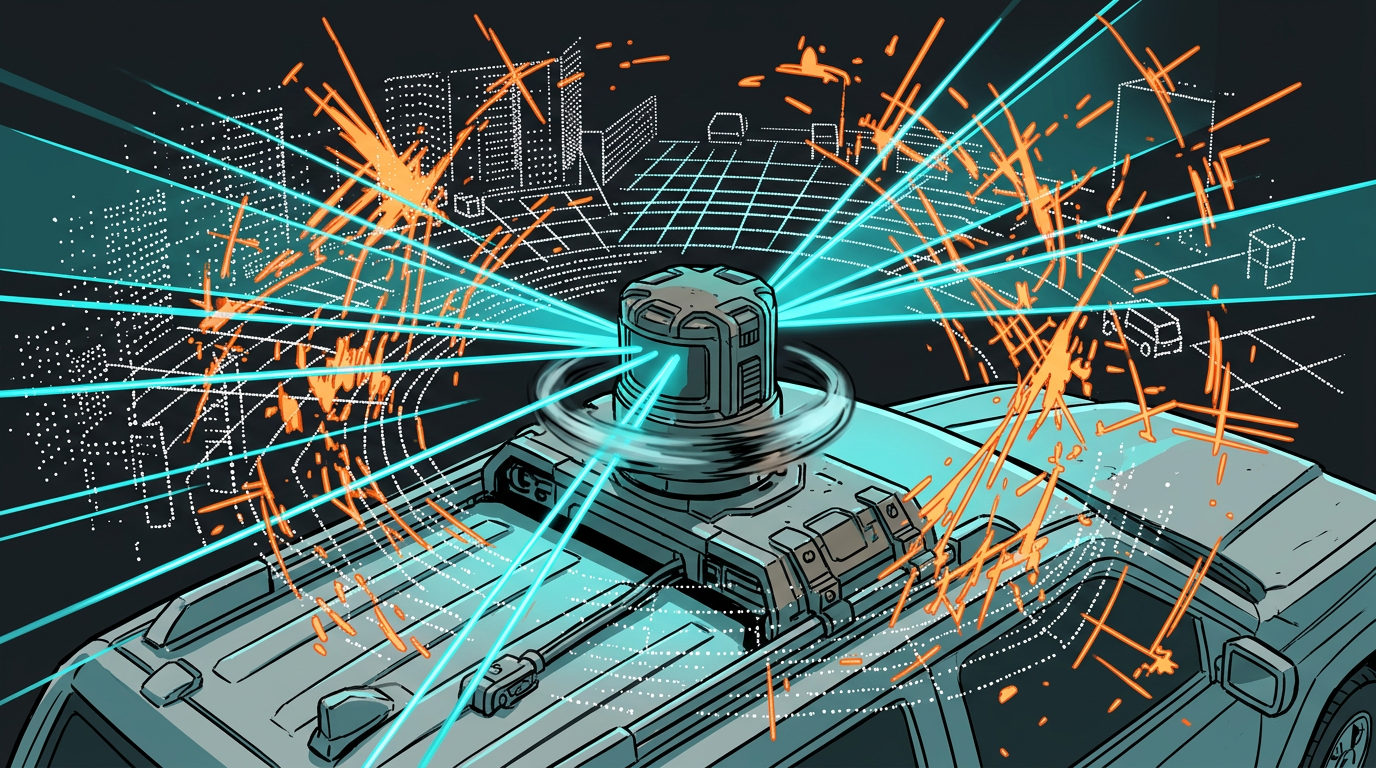
LiDAR jamming has been a stubborn problem for autonomous driving: attackers flood a sensor with high-frequency laser pulses until authentic returns are drowned out and the point cloud dissolves into noise. New research from Keio University suggests the raw data behind that noise still holds the truth.

The team found that while jamming randomizes the point clouds LiDAR produces, the underlying full-waveform data keeps distinguishable signatures separating attack signals from legitimate returns. They built PULSAR-Net, a U-Net-style network that exploits those signatures, along with simultaneous laser sensing in modern LiDAR systems, to reconstruct authentic point clouds even while an attack is underway.

Because no real-world datasets of jammed full-waveform LiDAR existed, the researchers generated training data with a synthetic-data generator built from physics models. PULSAR-Net trained exclusively on those simulated examples still delivered substantial reconstruction in real-world static and driving scenarios, which the authors highlight as evidence the approach generalizes.

The demo, shown at the VehicleSec 2026 demo session in Baltimore, frames the work as a defense layer rather than a detection-only fix. Reconstruction under jamming keeps downstream perception, planning, and control running when a spoofing attack would otherwise blind the vehicle.

With jamming gear now cheap and documented at security conferences, defensive work that operates on sensor internals rather than just flagging anomalies is a step toward keeping autonomous systems safe in hostile environments.

Join Our Newsletter
Subscribe to our newsletter to get our newest articles instantly!
TAGGED:Autonomous DrivingCybersecuritySensor SecurityThreat IntelligenceVehicle SoftwareVulnerabilities
SOURCES:USENIX VehicleSec 2026
Share This Article
Facebook Email Copy Link

Follow US

Find US on Social Medias
FacebookLike
XFollow
YoutubeSubscribe

You Might Also Like

CybersecurityElectric Vehicles

E-rickshaw hacking scare exposes cybersecurity flaws in connected EVs

By
ctadmin
July 21, 2026
Cybersecurity

rFpro Extends AV Simulation Platform With Cabin Monitoring Support

By
ctadmin
June 12, 2026
Policy & Compliance

Connected vehicle security act clears Senate committee hurdle

By
ctadmin
July 22, 2026
Cybersecurity

Vehicles are getting their own offline AI brain thanks to FEV and Microsoft

By
ctadmin
July 12, 2026
Cybersecurity

Slimmed-down AI detector lifts CAN bus replay attack catch rate

By
ctadmin
August 13, 2026
Cybersecurity

Uber and Wayve Launch London Robotaxi Service with Mapless AI System

By
ctadmin
June 12, 2026

CarThreat

Intelligence for the EV and automotive security market
  • News
  • Features
  • Spotlight
  • Events
  • About Carthreat
  • Our Mission
  • Services
  • Contact Us
  • OBD-II
  • Automotive Ethernet
  • TCU
  • Infotainment Systems
  • SDVs
  • BMS
  • ECU Security
  • CAN Bus
  • OTA Updates
  • Vulnerabilities
  • Relay Attacks
  • RCE
  • Threat Intelligence
  • Cybersecurity
  • Digital Keys
  • Bluetooth Security
  • ISO/SAE 21434
  • UNECE R155
  • Regulations
  • Data Privacy
  • EVs
  • Autonomous Driving
  • Pwn2Own Automotive

© 2026 Carthreat.com. All right reserved.  Privacy Policy | Legal

Welcome Back!

Sign in to your account

Username or Email Address
Password

Lost your password?