

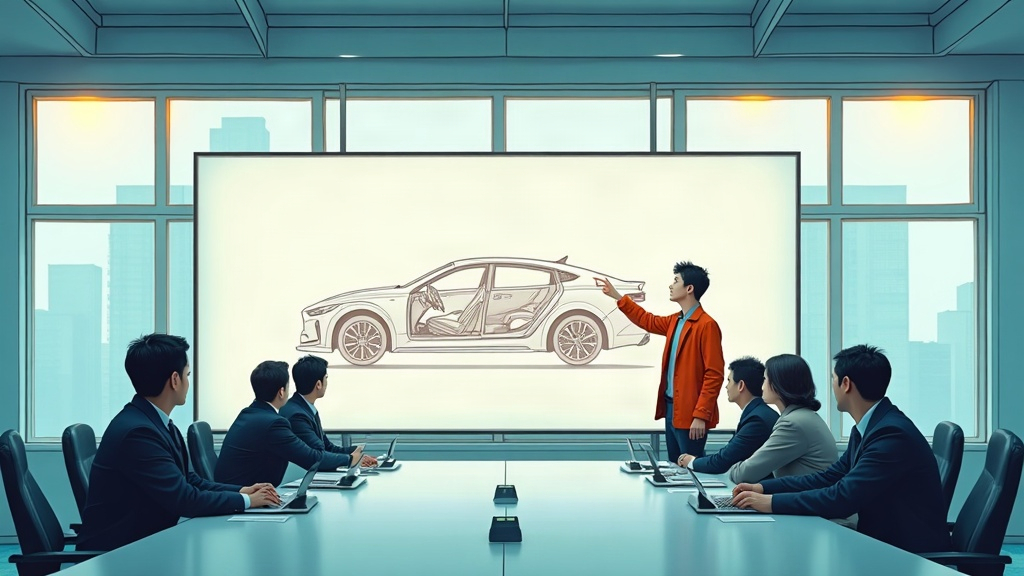
Japan’s largest carmakers have put advanced artificial intelligence on the list of things their vehicles must survive. The Japan Automobile Manufacturers Association, whose leadership includes Toyota, Honda and Nissan executives, has begun discussing how to stop frontier models being aimed at automotive software.
Keiji Yamamoto, a Toyota executive chairing JAMA’s Next-Generation Mobility Committee, raised the issue at a press conference on automated driving. Frontier models have sharply raised the threat, he said, and the association has opened work on two fronts: defence against such attacks, and engineering vehicles that resist them.
Two exposures, one tool
The first concern is the familiar one, an outsider using powerful AI to hunt for weaknesses in car code. The second sits closer to the factory. Running the same models over vehicle software during development surfaces faults quickly, which makes source confidentiality a security requirement in its own right.
JAMA defines a frontier model as any general-purpose system at the leading edge of current capability. An extremely capable code reviewer works for whoever holds it, and the help that lets an engineer tighten one module can point an attacker at parts nobody hardened. Chip vendors vary widely in how well they shield hardware and how openly they disclose faults, and because a single supplier’s silicon lands in many brands, one opening can travel.
Still talk, not policy
No binding agreement exists. JAMA chairman Koji Sato said the industry needs more thought on how AI should be built specifically for mobility, and the association’s remit stops at shared groundwork while driving systems stay competitive.