



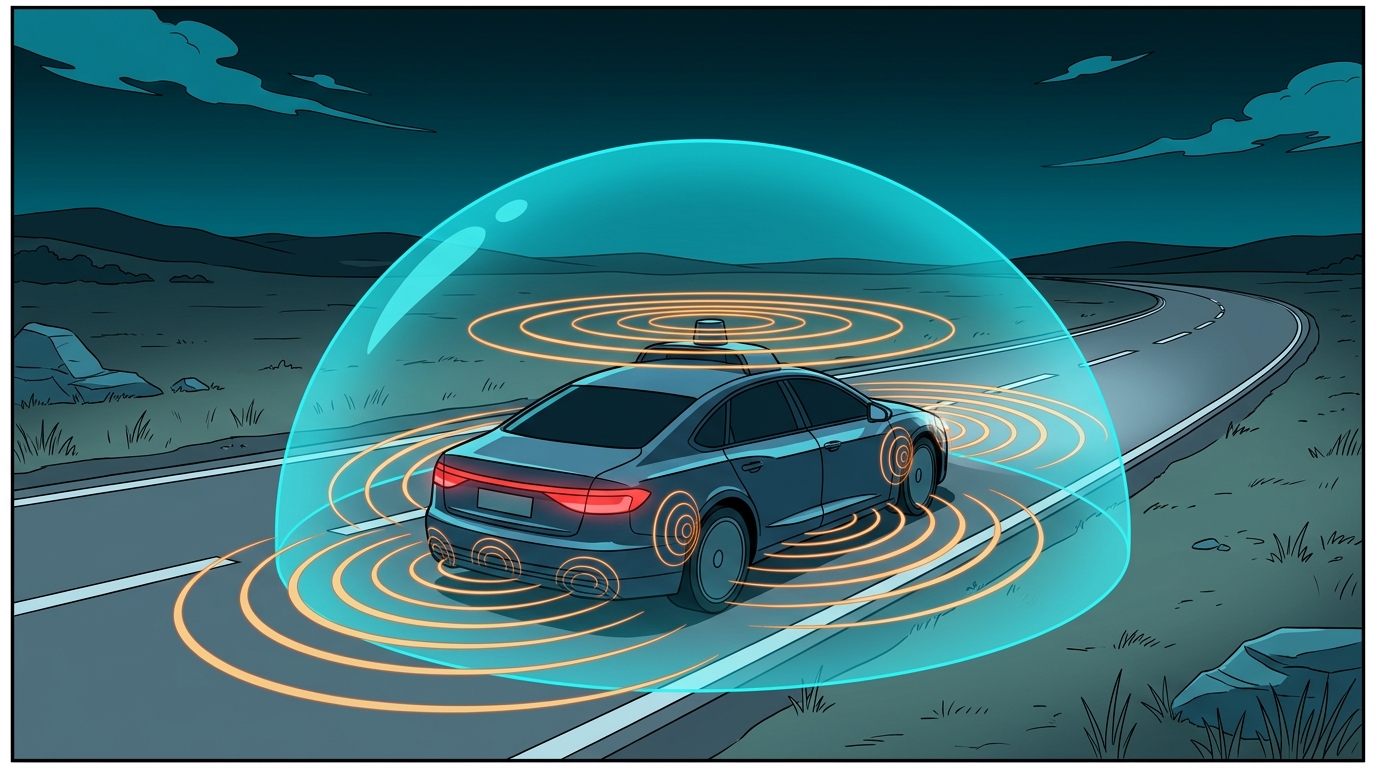
Researchers from Virginia Tech and the US DEVCOM Army Research Laboratory have built RAIL, a risk-aware framework that gives autonomous vehicles a structured way to detect intrusions mid-drive and respond without freezing the system or forcing a panicked takeover.
RAIL computes an Intrusion Risk Index that fuses runtime cues such as steering actuation integrity, time-to-collision proximity, and consistency between what sensors report and what the vehicle expects. A weighted Noisy-OR model turns those signals into a probabilistic risk score at control rate.
When risk rises, a contextual bandit picks which defensive shields to apply, and a graded authority mechanism blends between normal and safeguarded actions. The design keeps the vehicle efficient under low risk while containing threats early. Takeovers and near misses feed back through dual reward shaping and risk-prioritized replay.
Across the MetaDrive and CARLA simulators, RAIL matched expert-level success while cutting safety violations and operator interventions versus reinforcement learning and imitation baselines. Under CAN injection and LiDAR spoofing attacks, it reduced attack success rates by up to 48% and lowered disengagements under attack by more than 50%.
The team presented at VehicleSec ’26. Their finding: explicit, interpretable multi-source risk modeling delivers real robustness gains in safety-critical autonomy, and a system that knows it is under attack can keep driving safely instead of failing.