


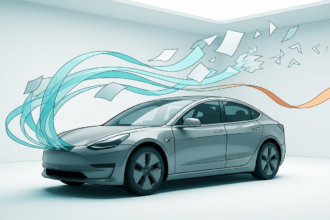



AI that works even when the signal drops
FEV has partnered with Microsoft to bring generative artificial intelligence capabilities to vehicle cabins using small language models that run on local Nvidia hardware. This setup allows drivers and passengers to interact with vehicle systems through voice, text, or gesture commands without needing a continuous internet connection. The technology relies on Microsoft’s Phi-4-mini-instruct model operating on Nvidia DRIVE AGX compute hardware, handling tasks like adjusting dashboard settings via voice commands entirely within the vehicle.
What a car brain means for the future of driving
This approach uses embedded small language models rather than cloud dependent large language models, keeping core functions available even when connectivity is limited or absent. This reduces backend infrastructure costs for original equipment manufacturers scaling software defined vehicle features. FEV has built a dashboard configurator demonstrating the capability in test vehicles, with near production applications expected later this year. Potential use cases include automated driving from SAE Levels 3 to 5, driver and passenger monitoring, and personalized human machine interface configuration. The offline capability addresses a structural vulnerability for OEMs, as vehicles whose AI functions degrade without connectivity face market resistance in regions with uneven infrastructure and may present a liability for safety critical applications requiring low latency.
Source: Automotiveworld