

A small country makes a big bet on autonomy
Belgian authorities have granted Aidoptation the European Union’s first permit to test Level 4 autonomous driving systems on public highways. The approval, issued by the Federal Public Service Mobility and the Flemish Agency for Roads and Traffic, covers 100 kilometers of the E313 and E314 highways in Limburg province at speeds up to 120 km/h. This marks a significant step forward for autonomous vehicle deployment in Europe, moving beyond controlled proving grounds into real world traffic conditions.
How Belgium plans to keep its roads safe without a driver
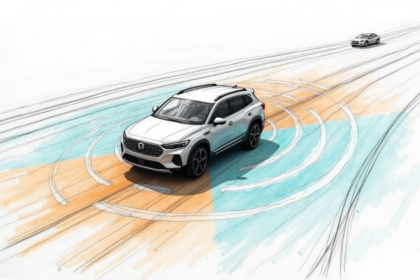
Testing will be conducted using a Maserati GranTurismo Folgore equipped with LiDAR, radar, and camera sensors. A human safety driver remains onboard at all times with authority to override the system. The trials are designed to validate Aidoptation’s EdgeDrive platform, which targets highway operation above 120 km/h. Critically, EdgeDrive relies on deterministic models rather than artificial intelligence, making its decision making processes fully traceable for both regulators and insurers. This approach directly addresses transparency concerns that have slowed autonomous system approvals across Europe.
What this means for every carmaker building for Europe
Aidoptation, founded as a spin-off of the Indy Autonomous Challenge in 2025, previously set a world autonomous speed record of 318 km/h at Kennedy Space Center. The company spent a year testing at proving grounds including Spa-Francorchamps and Circuit Zolder before securing this highway permit. The platform is designed for automotive OEMs and robotaxi operators seeking to extend their operational design domains to motorway conditions. For the connected vehicle ecosystem, this development demonstrates a path toward regulatory acceptance of Level 4 systems, with implications for software defined vehicle architectures and sensor integration standards that automotive cybersecurity engineers will need to account for in future vehicle designs.
Source: Automotiveworld