



The Fleet Cyber Challenge is a free online lab where participants attack simulated commercial vehicle systems. The National Motor Freight Traffic Association opened it this week.
What sits inside the lab
Seven tracks hold 32 individual exercises. The scenarios cover electronic logging devices, GPS spoofing, telematics units, vehicle communications and firmware.
Each is built on tools freight shops already handle: control unit traffic, tracking hardware, diagnostic software. Everyone works at their own pace and never touches a real truck.
Finishing all seven unlocks a virtual badge and a certificate. The format is capture the flag, the conference staple, retuned for people who fix trucks.
Mechanics were the intended audience
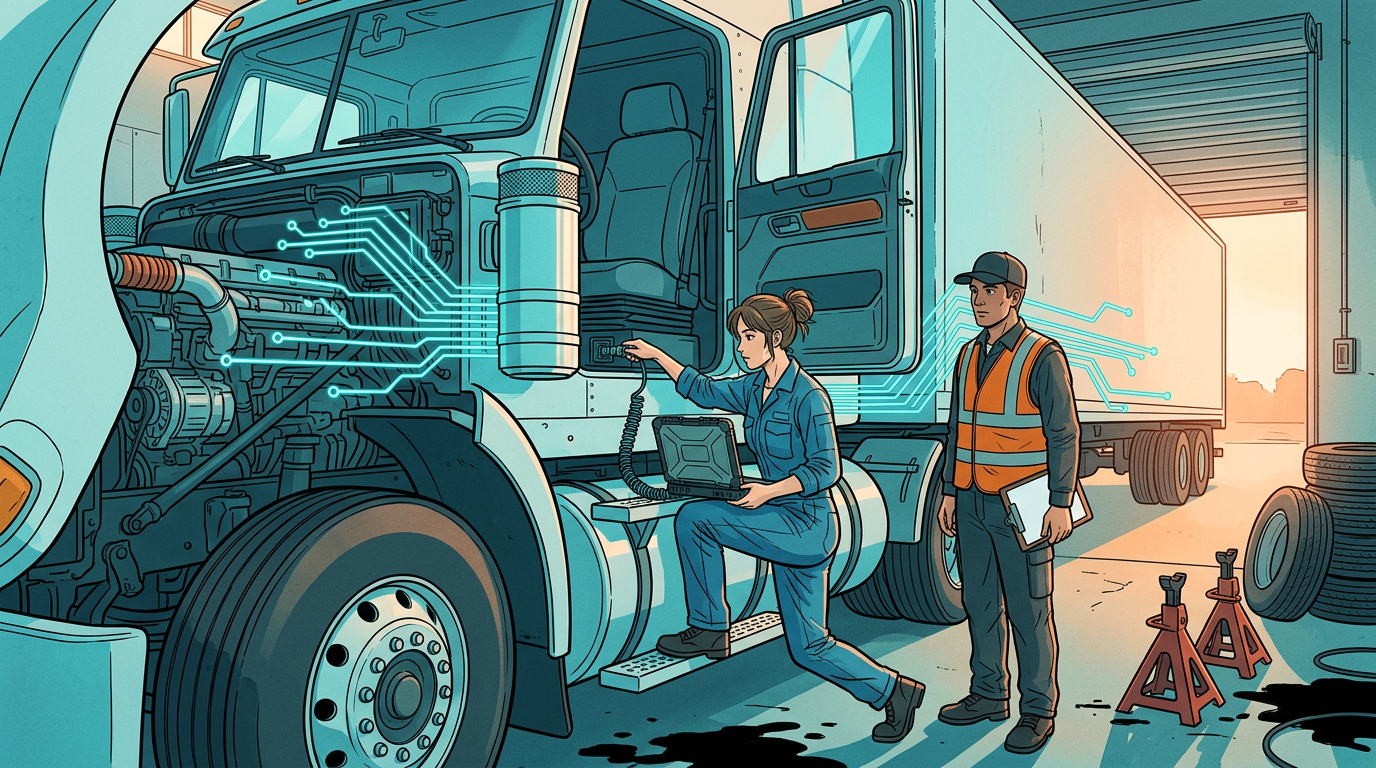
This is not aimed at security teams. It targets maintenance technicians, diesel mechanics, diagnostic specialists and fleet IT staff, the people who plug a laptop into a tractor and trust it.
Joe Ohr, its chief operations and technology officer, called a modern truck an office on wheels running connected systems for freight and communication, and said the connectivity carries risk.
Ben Gardiner, a senior research engineer there, said the exercises came from real commercial vehicle security problems so people can experiment and think like a researcher.
The margin nobody staffs
Freight operators spend heavily on uptime and little on adversarial testing. A technician who has deliberately spoofed GPS or broken an ELD will notice faster when a truck reports coordinates that cannot be real.
Gardiner has spent years inside brake controllers and trailer telematics, so the exercises reflect failures that reached production hardware.
The quiet part is what it says about the sector. An industry body decided the fastest way to harden connected trucks was training the shop floor, not waiting on regulation.