




Regulatory Expansion Across Europe
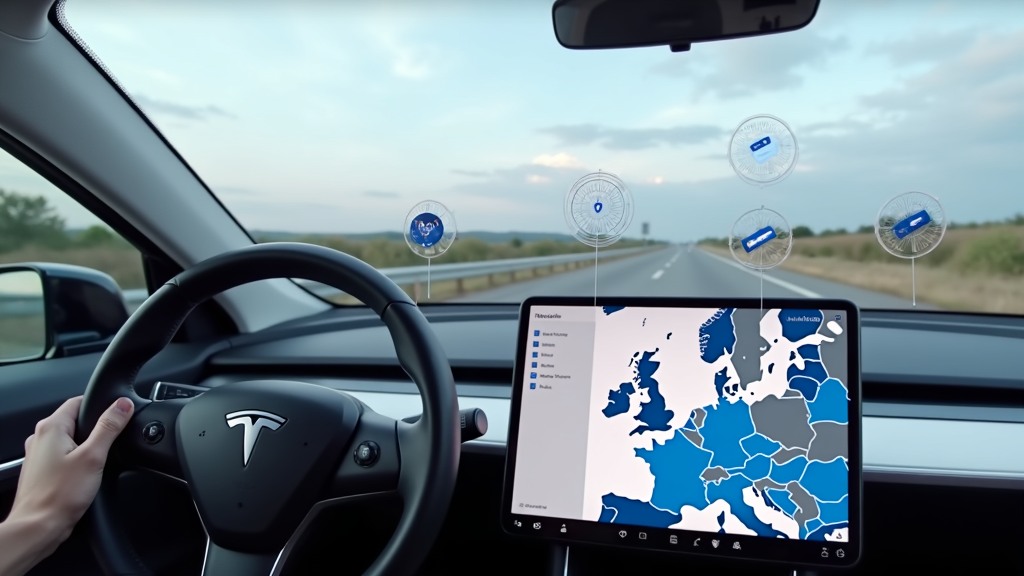
Belgium has become the fifth EU member state to approve Tesla’s Full Self-Driving (FSD) software, following closely after Denmark’s clearance. The approval was signed by Flemish Mobility Minister Annick De Ridder on June 11, 2026, after Tesla completed a series of in-country tests. The Netherlands, Lithuania, and Estonia had already granted approvals since April, when the Dutch initial type-approval created a legal anchor that allows other member states to recognize FSD without conducting independent assessments.
The European variant of FSD v14 software is currently restricted to Hardware 4 vehicles manufactured from 2023 onward. Sweden and Latvia are reportedly advancing their own paperwork, while Tesla AI Chief Ashok Elluswamy confirmed at a recent conference that a broader EU rollout map is being tracked internally.
Impact on EU-Wide Adoption and Security Implications
A pan-EU approval remains challenging due to voting thresholds within the European Commission’s Technical Committee on Motor Vehicles, where Germany, France, and Italy collectively hold veto power. None of these three nations have progressed FSD clearance. For automotive cybersecurity engineers and OEM security teams, this staggered regulatory landscape raises critical questions about securing over-the-air update mechanisms across jurisdictions, ensuring consistent safety validation standards, and managing software branch variations between European and global FSD versions. The rollout also underscores the importance of understanding how autonomous driving features interact with regional traffic regulations and infrastructure security requirements.
Implications for Connected Vehicle Ecosystems
As FSD expands across EU states, the attack surface for connected vehicles grows regionally. Each new territorial approval introduces additional infrastructure dependencies, including V2X communication protocols and local map data integrity checks. OEMs and tier-1 suppliers must monitor how software-defined vehicle architectures handle multi-jurisdictional compliance, particularly regarding data privacy under GDPR and ISO 21434 risk management for autonomous driving functions. Fleet managers should evaluate how regional FSD availability affects vehicle procurement and liability frameworks across borders.
Source: Automotiveworld