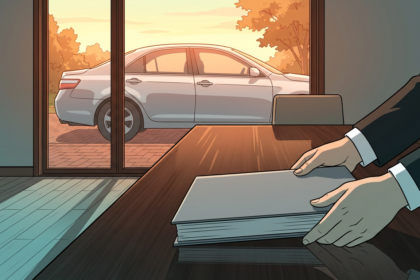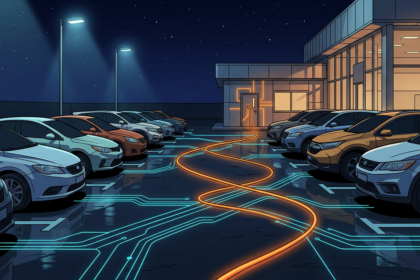


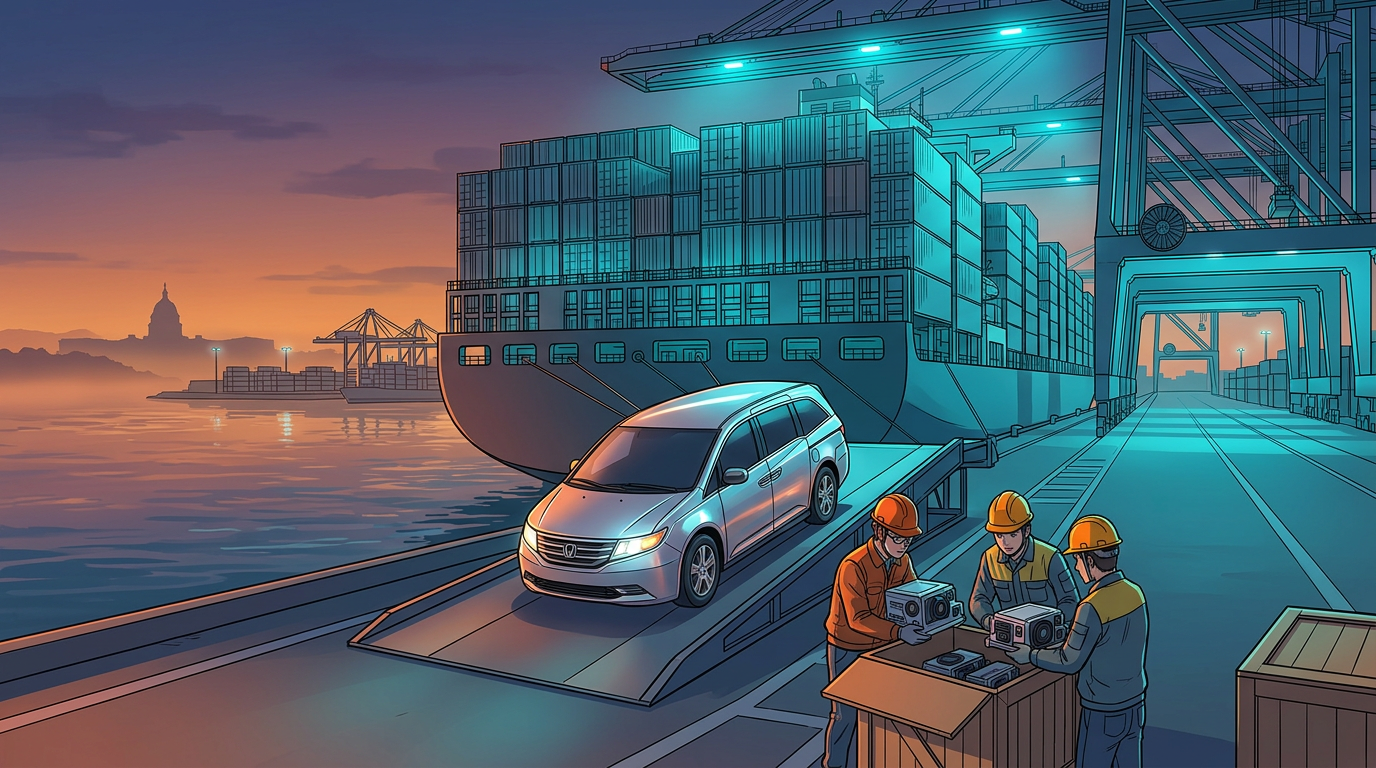
Behind the name Ojai sits a silver minivan. Zeekr, the brand China’s Geely owns, builds it in Ningbo, ships it through Los Angeles, and workers in Mesa, Arizona fit the American autonomy hardware before Waymo puts it on the road.
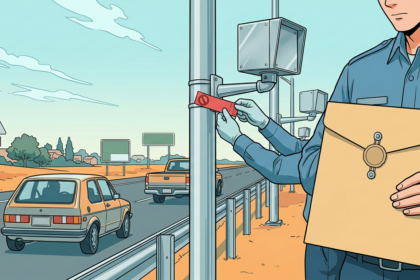
Customs records show more than 3,200 of those chassis entering the United States since 2024, and over 2,600 of them arrived this year alone.
The arithmetic is striking. A 127.5 percent tariff pushes a shell worth roughly $38,000 to about $86,500 before the sensing stack goes on, which Forbes pegs near $25,000. Even loaded, the minivan undercuts the Jaguar I-Pace cars the fleet has been retiring.
This is the arrangement Senators Bernie Moreno and Elissa Slotkin aimed at with their Connected Vehicle Security Act. Filed in April 2026, the measure would prohibit importing, selling and operating vehicles built in China or in other designated countries of concern. Moreno went after the Geely deal directly at a February hearing, describing the glider model as a way around the rules.
Nothing has happened since. Senator Rand Paul’s objection was that the language could catch Mercedes-Benz through its Chinese shareholders. Floor action then slid past the midterms. A transition period floated around the bill would give commercial fleets until 2030.
Waymo’s defence rests on what it keeps to itself: rider data, its autonomy software, algorithms and source code. Missy Cummings, a former senior safety adviser at NHTSA, told reporters that answer does not settle what sits inside a chassis built on the far side of the Pacific.
The company has said it wants roughly 20,000 vehicles by the end of next year.