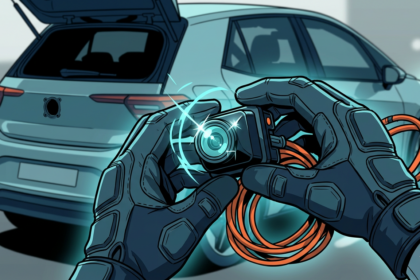



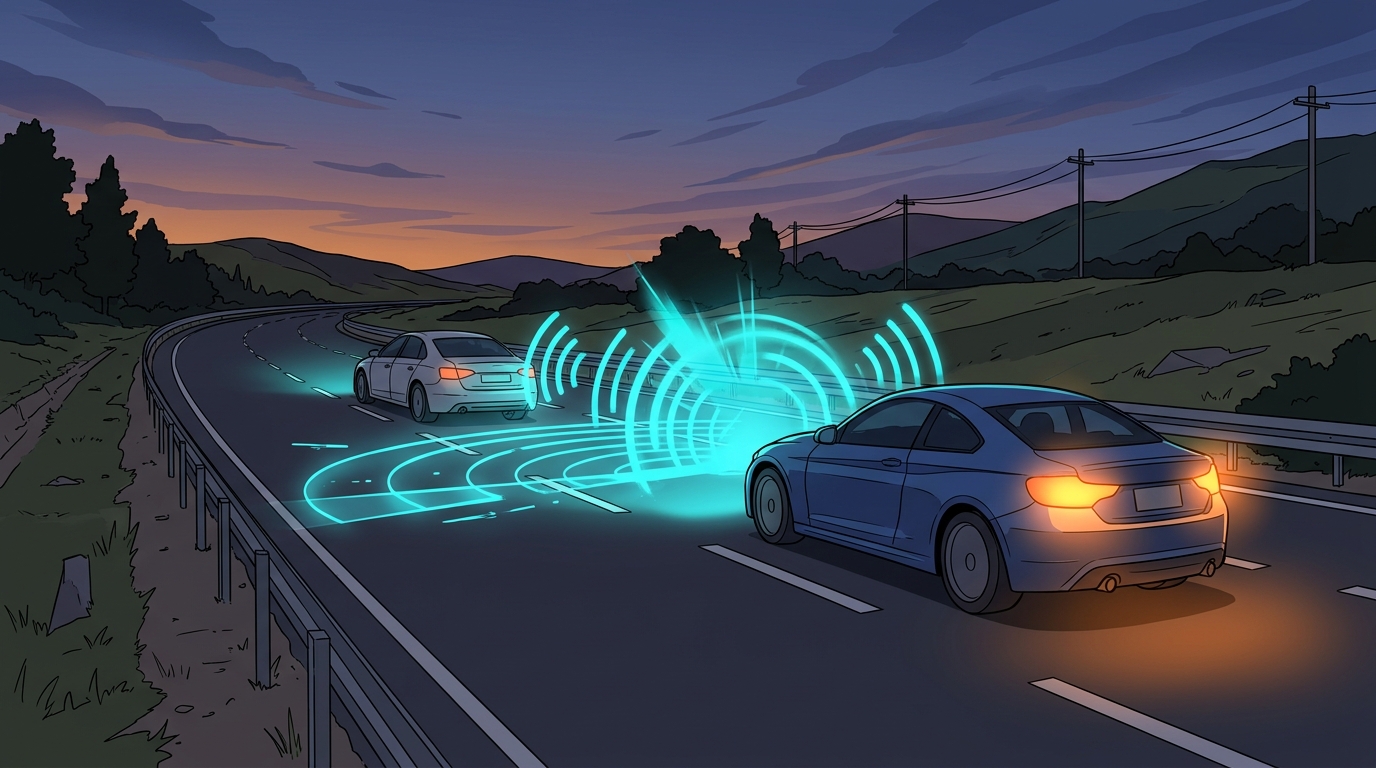
Spoofed brake warnings could become a weapon in connected traffic. Researchers at Purdue University showed at VehicleSec ’26 in Baltimore that a car with compromised credentials can push fake emergency electronic brake light messages into a V2X network and make neighboring vehicles hit the brakes for a phantom hazard.
The emergency electronic brake light application tells upstream traffic about hard braking. The Purdue group found that conventional misbehavior detection, which runs generic plausibility checks over every basic safety message, either cries wolf during normal driving or misses attackers who keep their fake trajectories physically consistent.
Across repeated test runs, their countermeasure recorded an F1 score of 0.922, caught 88.3 percent of attacks with a 0.9 percent false positive rate, and trimmed average braking severity by 75 percent. Called MIRAGE, the detector stays dormant during normal driving and only wakes when an emergency brake alert appears, then cross-checks the reported event against the motion the vehicle actually exhibits.
The team, including Eunhan Ka, Doguhan Yeke, Z. Berkay Celik, and Satish Ukkusuri, says the system kept its edge against both spoofing variants they tested and caps how hard the vehicle reacts even when a fake alert slips past it.
The work lands as V2X deployments widen. A single fabricated brake event in dense traffic could set off a chain of rear-end collisions, which makes robust misbehavior detection a safety prerequisite rather than a nice-to-have.