




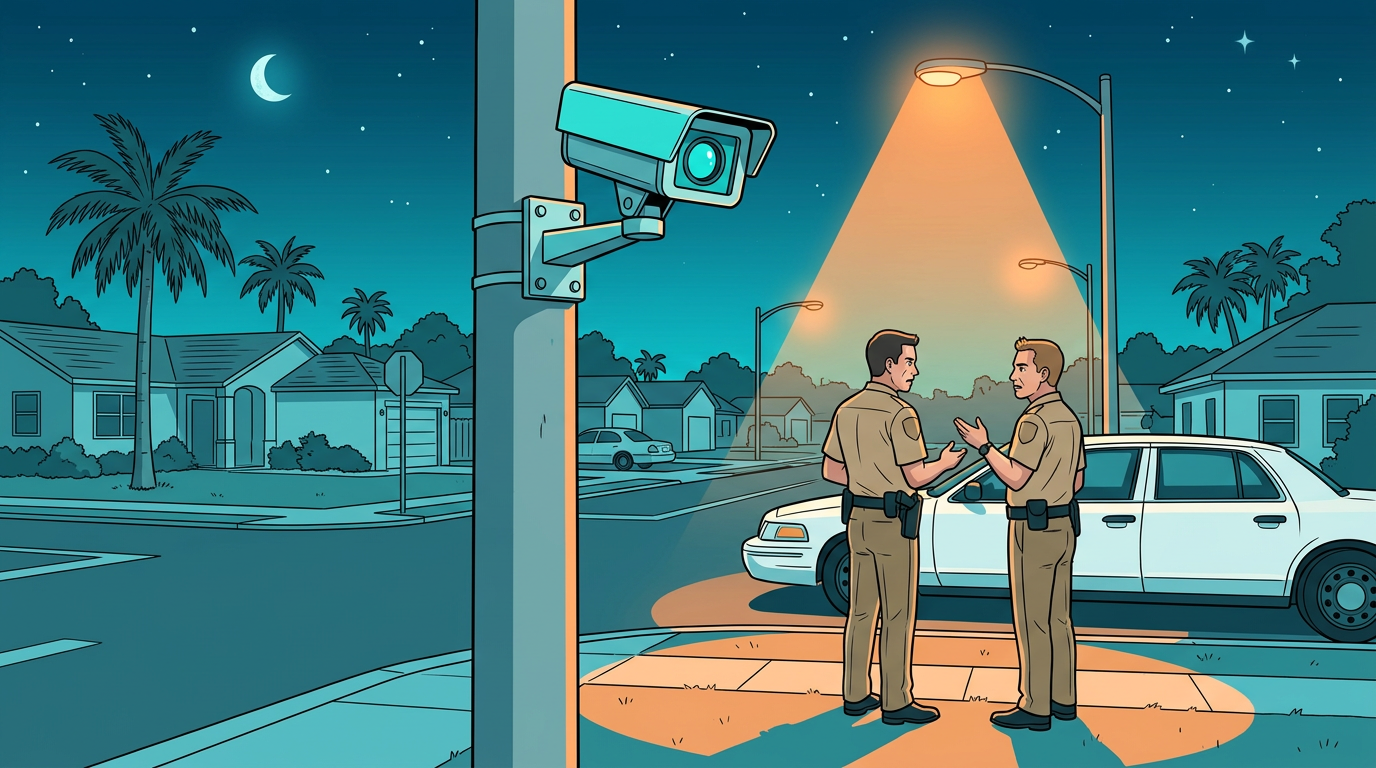
Pinellas County sheriff’s deputy Ronald Scott was arrested on November 5. Sheriff Bob Gualtieri told reporters that Scott, mid-divorce, had used the agency’s plate-reader database to learn where his estranged wife and her boyfriend had traveled, starting on Valentine’s Day.
The queries ran past 100. Scott resigned the day before his arrest.
The audit that finally noticed
Gualtieri said he learned of the pattern only because Flock released a wider audit tool than his staff used. He was unsurprised the earlier review missed it, and believes every past case is now found.
The record argues otherwise. An earlier audit, prompted by TCPalm reporter Jack Lemnus, led to the arrest of former deputy Karl Gwynne, accused of roughly 300 searches for a woman he was pursuing. On October 29, State Attorney Bruce Bartlett declined to prosecute, writing that Florida statutes do not address the conduct and that he would ask lawmakers to fix the gap.
One county, two departments, one week
Across the bay, St. Petersburg Police Chief Anthony Holloway told a council panel that a former officer could face charges, with the state attorney deciding. Council Vice Chair Richie Floyd asked whether outside agencies with query agreements face limits on use.
They do not, Holloway said. The city runs 42 cameras under a five-year, $730,250 contract approved in 2024 on a consent agenda. Searches need an offense type, case number and reason, and a major reviews them weekly, yet 100-plus queries took a vendor upgrade to surface.
The pattern reaches past Florida. Agencies were ordered this year to pull readers off state highway rights-of-way, county commissioners declined to vote on a ban while waiting for the legislature, and Flock has spent more than $2M on lobbying. Each fight now turns on what a search log actually records.