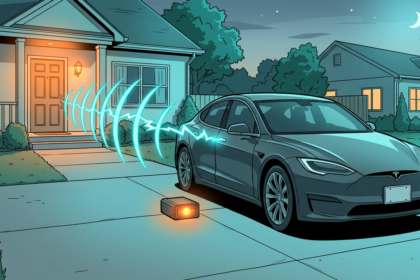






Keyless car theft is driving a record surge in vehicle theft across the United States and Canada, costing the automotive industry billions annually. Modern thieves exploit connected vehicle technologies through CAN injection, key fob cloning, and relay attacks that bypass traditional anti-theft systems in under 30 seconds.
CAN injection involves tapping directly into the vehicle’s CAN bus via a headlight or diagnostics port and injecting fake messages to start the engine without a valid key. Key fob cloning connects to the OBD-II port to reprogram a blank key fob, a technique commonly used on delivery vans and rental cars. Relay attacks use paired signal-boosting devices to capture and retransmit key fob signals through walls, tricking the car into unlocking and starting.
The financial impact extends beyond vehicle owners. OEMs face reputational damage and potential liability as theft rates climb, while insurance companies are raising premiums and reevaluating coverage models for vulnerable models. UK data showed 58% of vehicle thefts involved keyless techniques between April 2023 and March 2024, and North America is following the same trajectory.
PlaxidityX recommends OEMs adopt AI-powered edge-based anti-theft solutions that detect unauthorized CAN bus activity in real time rather than relying on factory immobilizers that cyber thieves have learned to bypass. The challenge is particularly acute for fleets where a single compromised vehicle can expose operational data across the entire organization.
As vehicles become more connected and software-dependent, the window for physical theft continues to widen even as digital protections improve.