

Centralized Cloud Architecture for Multi-Brand Operations
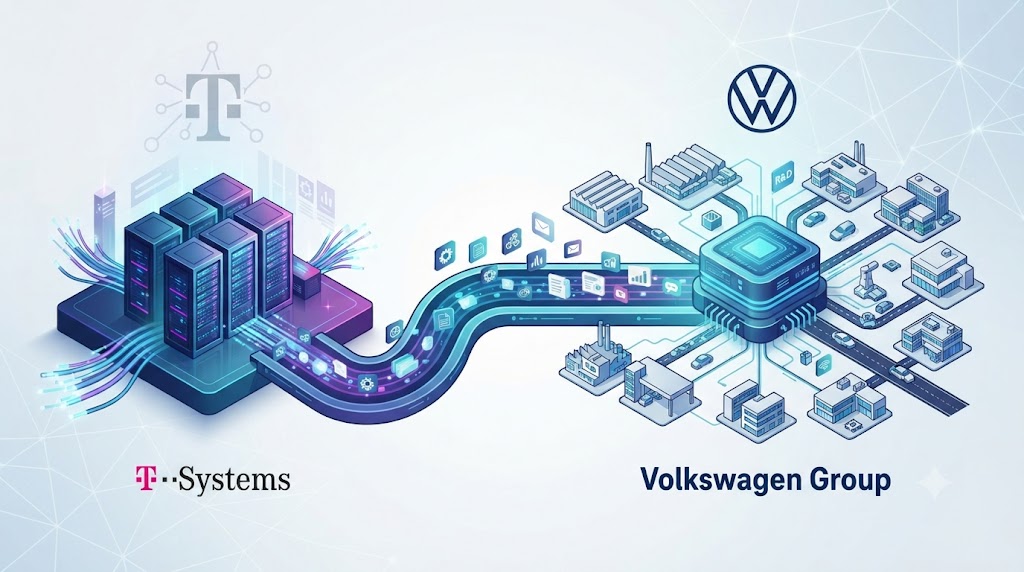
T-Systems, the German IT services and digital solutions provider, has announced it is building and managing a new private cloud platform specifically for the Volkswagen Group. Named the “Group Private Cloud,” this infrastructure is designed to serve as a central system for applications used across all of VW’s brands, including Audi, Porsche, Škoda, and SEAT. The move aims to consolidate the diverse application landscapes of these brands into a unified, secure environment.
Over time, T-Systems will migrate existing applications from various VW brands into this centralized cloud. This consolidation is intended to streamline data management and improve operational efficiency across the group’s global operations. The project emphasizes adherence to European data protection regulations, which is a critical factor for automotive companies operating in multiple jurisdictions.
Impact on Automotive IT Security and Data Governance
For the automotive sector, this development is significant for two main reasons: cybersecurity and data sovereignty. By centralizing applications onto a private cloud, VW can implement uniform security policies, access controls, and monitoring across all its brands. This centralized approach reduces the attack surface compared to managing separate, siloed IT environments, making it harder for adversaries to exploit configuration gaps or inconsistent security postures.
Furthermore, the use of a private cloud rather than a public cloud solution gives VW greater control over its data. This is particularly important for protecting sensitive vehicle data, customer information, and intellectual property related to software-defined vehicles. The architecture will likely support secure over-the-air (OTA) update management and telematics data processing, both of which are essential for modern connected vehicles. This infrastructure move aligns with broader industry trends toward software-defined vehicles (SDVs) where robust backend cloud platforms are as critical as the in-vehicle electronics for ensuring security and functionality.
Source: Marklines