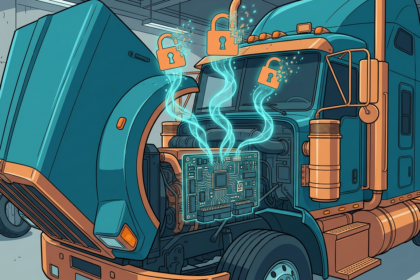
Automotive firmware protection built around code signing alone is no longer enough, argues a two-part VicOne analysis published this week. The reason is economic: AI is collapsing the cost of reading binaries.
Author Seigo Yamamoto cites Anthropic's Claude Mythos Preview reconstructing plausible source code from a stripped binary, cross-referencing that reconstruction against the original, and surfacing a flaw that could have granted administrator privileges on a smartphone. OpenAI's GPT-5.4-Cyber, he notes, was given the ability to analyze compiled software without source access.
Reverse engineering a stripped image used to demand scarce expertise and long hours. That entry price is falling. Attackers consequently gain little from first compromising a build or distribution server. Images pulled off a maintenance laptop, a diagnostic port, a reflash tool or a debug interface supply the same starting material.
Yamamoto's remedy is architectural. Secure boot with anti-rollback enforcement, encryption, key management and runtime protection should be engineered together, he writes, not bolted on one layer at a time. Plaintext updates, a key reused across several product lines, or firmware a service tool can lift without resistance each widen the opening.
Coverage is the second gap he identifies. New ECUs and OTA-capable hardware are the easy cases. End-of-life parts and supplier-supplied images belong in the same threat model, since a weakness proven against an old asset can resurface in a new vehicle line. Sitting outside UN Regulation No. 155 type approval buys no exemption.
Last comes monitoring. Rather than treating a leak as an incident to investigate afterwards, Yamamoto wants defenders to assume one has happened. Watching for full images alone is insufficient, he argues, because update packages, manifests, diff patches, service manuals, debug scripts, flashing tools and symbol files each reveal structure worth inferring from.