

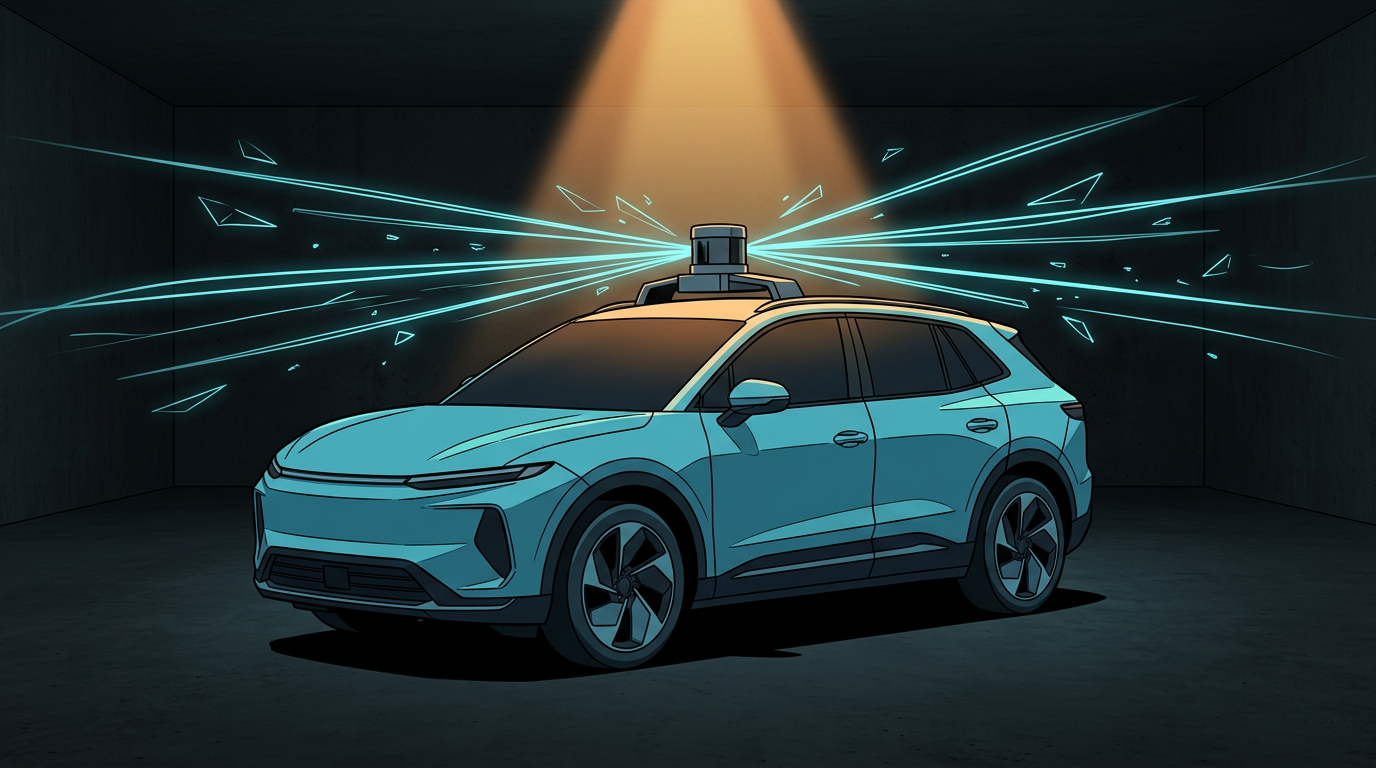
Hesai and RoboSense dominate the market for lidar, the laser ranging sensors that give self-driving cars a high-resolution view of their surroundings. Their components are now under security review at a US government laboratory, while Congress weighs several bills to ban Chinese-made sensors from American roads.
An unnamed company or group of companies in the electric and autonomous vehicle industries is footing the bill for the review, which is taking place at the Department of Energy’s Idaho National Laboratory, according to two people familiar with the effort. The lab said it could not discuss the project. China’s leading lidar suppliers, Hesai and RoboSense, did not answer questions about it.
Sponsors of the ban bills see real espionage risk. Senator Tammy Baldwin, who leads the Securing Infrastructure from Adversaries Act with Senator Ted Budd, warned the technology could be used for military or industrial spying, and Representative John Moolenaar has cited back doors that could beam data to Chinese interests.
Omer Keilaf, CEO of Israeli lidar firm Innoviz, described two attack scenarios in a recent interview. Sensors could be disabled en masse, halting robotaxis mid-route and bricking parked vehicles. The dense point-cloud data lidar generates could also be compressed and siphoned out over a cellular chip, which Keilaf, a former Israeli intelligence officer, said is not difficult to do.
Chinese suppliers drove lidar prices from roughly $75K a decade ago to a few hundred dollars, bankrupting US rival Luminar. Rivian, GM, Ford, Kodiak, Lucid, Nuro and Uber are all reported to be weighing Chinese sensors, and none told TechCrunch it knew about the review. A clean bill of health would legitimize the cheapest sensors on the market, while findings of risk would arm the lawmakers already moving to ban them.