




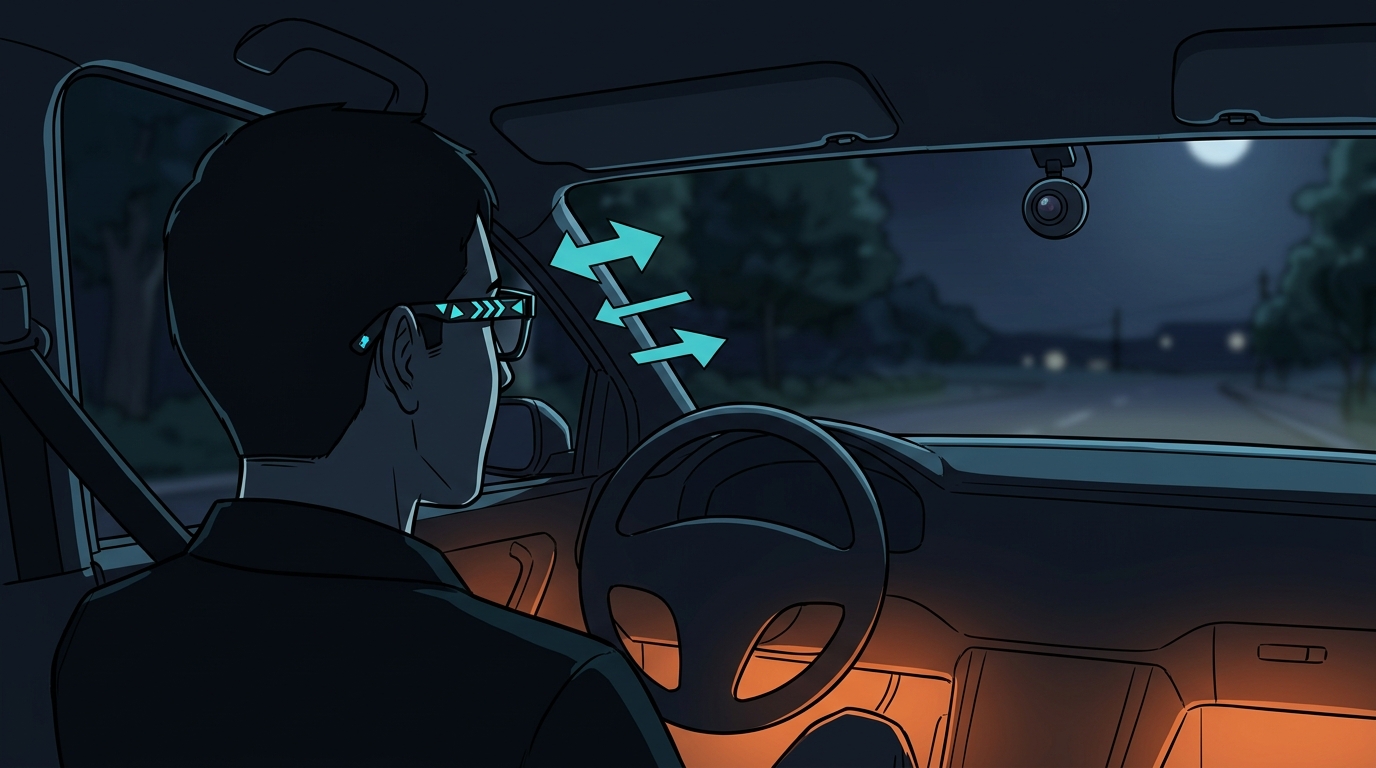
Driver monitoring is only as honest as the camera that does the watching, and a University of California, Irvine team showed that camera can be fooled with patterns printed on eyeglasses.
The GazeLock framework targets the gaze-estimation models used by driver monitoring systems across Level 2 to Level 4 vehicles. Patterns applied to the frames push the estimator toward a predetermined gaze reading, whatever direction the driver’s eyes actually point. One variant uses ordinary printed colors; another relies on infrared-sensitive inks that people cannot see but near-infrared monitoring cameras pick up clearly.
The implications cut to the safety logic of assisted driving. A driver who wants to dodge attention checks, or an attacker who wants the car to believe a distracted or impaired driver is fully engaged, can simply wear the frames. In Level 3 setups the monitoring system decides when to demand a human takeover, so a deceived camera could delay or suppress that request at exactly the wrong moment.
The team demonstrated the effect in a live session, letting visitors put on the glasses and watch the simulated monitoring interface report a fixed gaze direction in real time, backed by video captures from varied conditions.
The demo ran at the VehicleSec ’26 conference in Baltimore, joining a wave of new work targeting the sensors that watch the people behind the wheel.