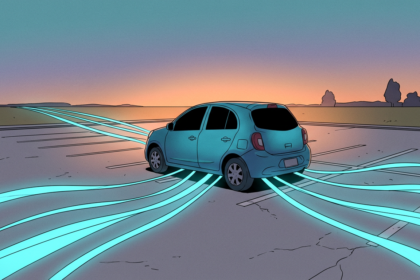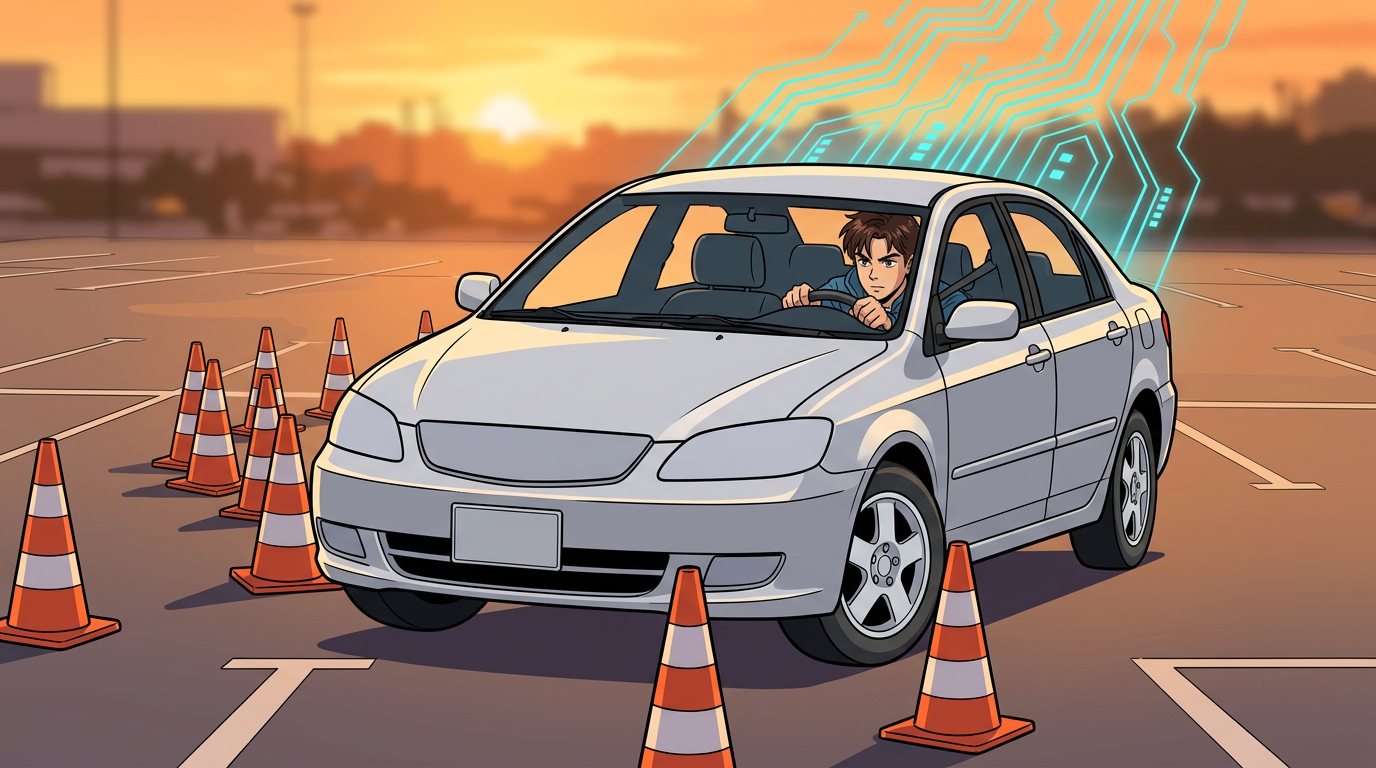
A weekend side project in San Francisco put general-purpose chatbots in charge of a moving car. Three engineers who call themselves DrivingBench rented a Toyota Corolla, connected GPT-6 Astra, Claude Fable 5.1, Grok 4.6 and GPT-5.6 Sol to its steering, accelerator and brakes, and asked them to drive a cone course in a public parking lot.
The hardware was an off-the-shelf Comma unit, a windshield-mounted device that reads the road and integrates with a car’s electrical systems and sensors. Its software is open source, which let the team route camera data to a laptop running the models. Two of the chatbots managed only a few metres. GPT-6 Astra eventually completed the lap.
Nobody told the rental company. That detail matters more than the scoreboard. The experiment shows how little stands between an internet-connected language model and a vehicle’s control bus once a consumer-grade driver-assist kit is modified. The models had no driving-specific training and no safety envelope beyond a person’s foot hovering over the brake.
The team framed the work as a benchmark for AI acting in the physical world. The device is already drawing official attention. A defect investigation targeting Comma opened last week, after two crashes linked to its system left three people dead. The company behind the kit markets it as an add-on for cars that never shipped with self-driving hardware.