



Robinhood Ventures Fund II began trading on the NYSE today under the ticker RVII at $25.00 a share, giving retail investors a listed route into roughly 79 venture-stage startups. The business development company, or BDC, holds nearly all of its positions as $250K SAFEs and concentrates on Y Combinator alumni. It is one of the few listed vehicles that lets non-accredited investors hold venture-stage stakes without a capital call. Its automotive exposure is thin, but the companies it holds trace a clear pattern: the fund is betting on the infrastructure around self-driving cars, not on carmakers themselves.
Watch the RVII roadshow.
The autonomy-adjacent holdings
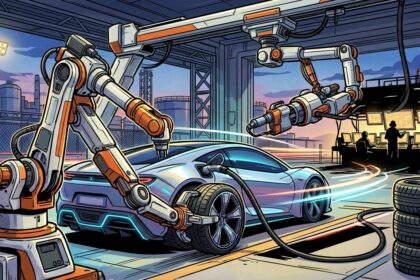
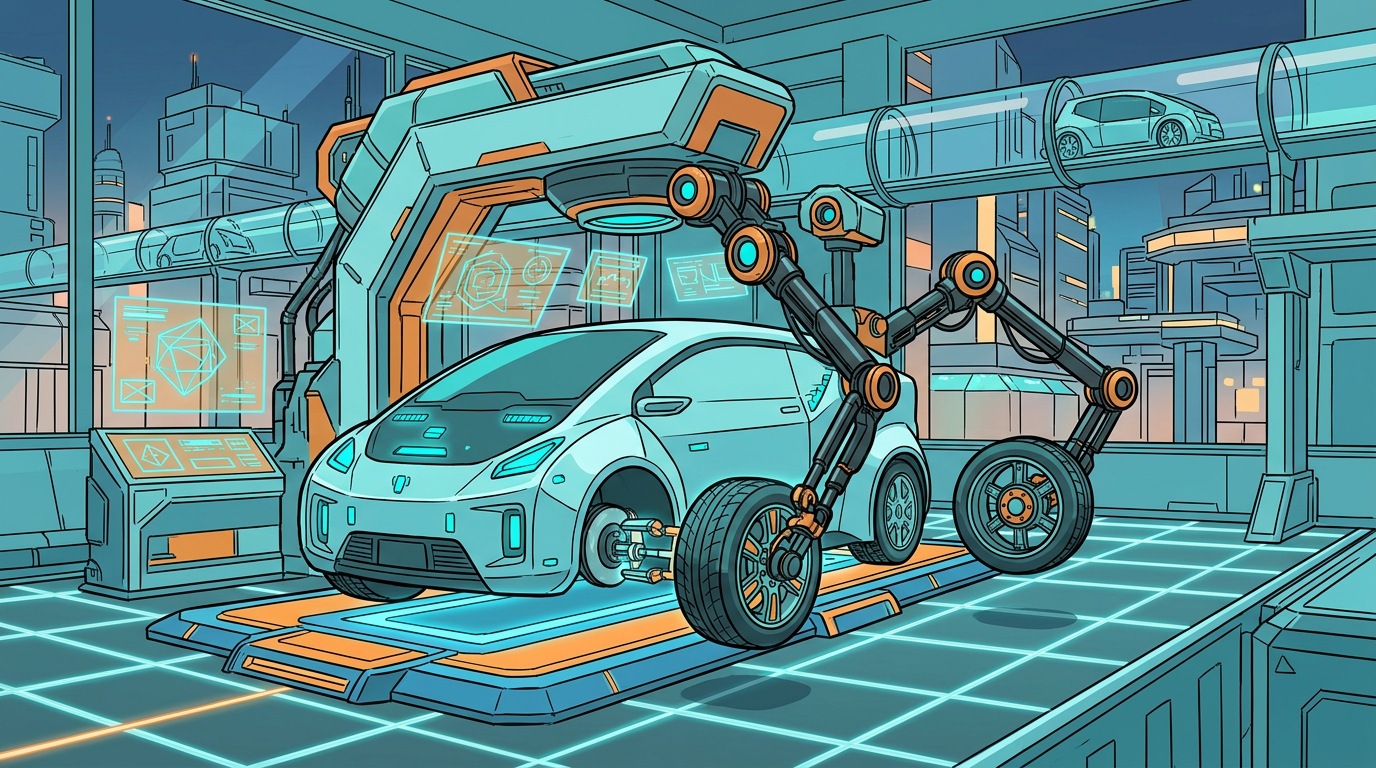
Aseon Labs is the fund’s clearest automotive bet. The startup is building robotic pit stops for self-driving cars, automated service bays that charge, clean, and swap tires on autonomous fleets without a human crew on site. For fleet operators, that means lower downtime and predictable maintenance. The security angle is a new physical-digital boundary: a bay that plugs into a vehicle’s networks for diagnostics or firmware updates gains privileged access to every car it touches, so a compromised bay could reach far beyond a single vehicle.
Avea Robotics takes a different approach to the same problem. The company builds human-in-the-loop teleoperation for robots, letting remote operators take over when autonomy hits an edge case it cannot resolve on its own. Teleoperation is an obvious security surface: the wireless link between operator and machine can be jammed, spoofed, or hijacked, which turns a remote assistant into a remote attacker. Authentication and session integrity are the difference between a safety net and an open door into the vehicle.
Shotwell builds the observability layer for robotics, the logging and monitoring stack that fleets need once they leave the lab, covering uptime, debugging, and fleet-wide health. Eden Robotics sells multi-use autonomous robots as a service, letting warehouses rent capable machines instead of buying them. That subscription model is robotaxi-adjacent in practice: it treats autonomy as an operational service with recurring revenue rather than a one-off hardware sale.
Thin exposure, infrastructure thesis
None of these companies builds cars, and none sells in-vehicle security. The fund’s automotive exposure runs through autonomy infrastructure: the bays that service self-driving fleets, the teleoperation links that backstop them, and the software that keeps robots healthy. For a fund writing small checks, that makes sense. Vehicle manufacturing is capital-intensive and heavily regulated, while infrastructure bets ride the software layer and can reuse across robotics beyond cars.
For readers who track vehicle security, the takeaway is where the next attack surfaces get created. Robotic service bays that plug into vehicle networks, teleoperation channels that can be spoofed, and fleet observability stacks that see every robot’s health data are all trust boundaries in the making. None of that is a headline security product, but each is a new place where an attacker can stand. RVII’s bets are small, but they mark where retail capital now touches the autonomy supply chain.