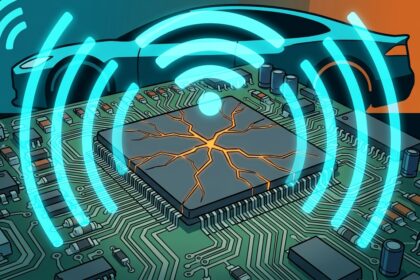





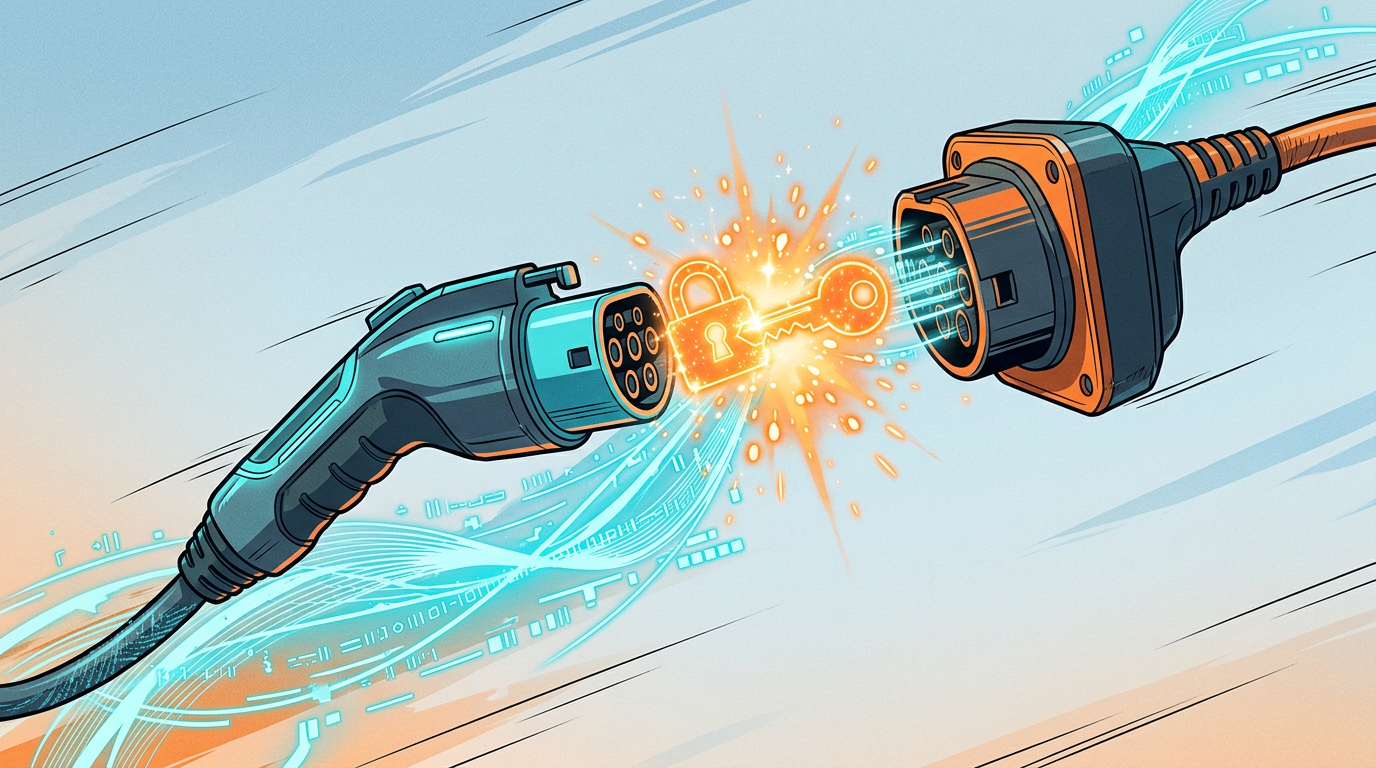
EV charging has a quiet weak spot: the pairing handshake that locks the connection between car and charger can expose plaintext keys. Researchers at the University of Alabama demonstrate a key establishment scheme for CCS charging that removes certificates and plaintext delivery from the process.
The work targets SLAC, the pairing step in Combined Charging System sessions where the vehicle and charger negotiate over power-line communication. The team says today’s approach delivers a network master key in a way that leaves the exchange exposed to man-in-the-middle attacks at the PLC layer. Their design uses identity-based cryptography to derive keys non-interactively and in a decentralized way, eliminating the extra message exchanges and certificate overhead of ECDH-based alternatives.
Combined with policy-controlled fallback, the approach also reduces downgrade opportunities during SLAC key establishment. The result is a handshake with fewer moving parts and less plaintext on the wire, which matters as chargers become a favorite research target: Pwn2Own Automotive contestants and independent teams have repeatedly found flaws in charger authentication and payment flows.
The demo was presented at VehicleSec 2026. The authors say the scheme can be integrated into the existing SLAC process without new hardware.