



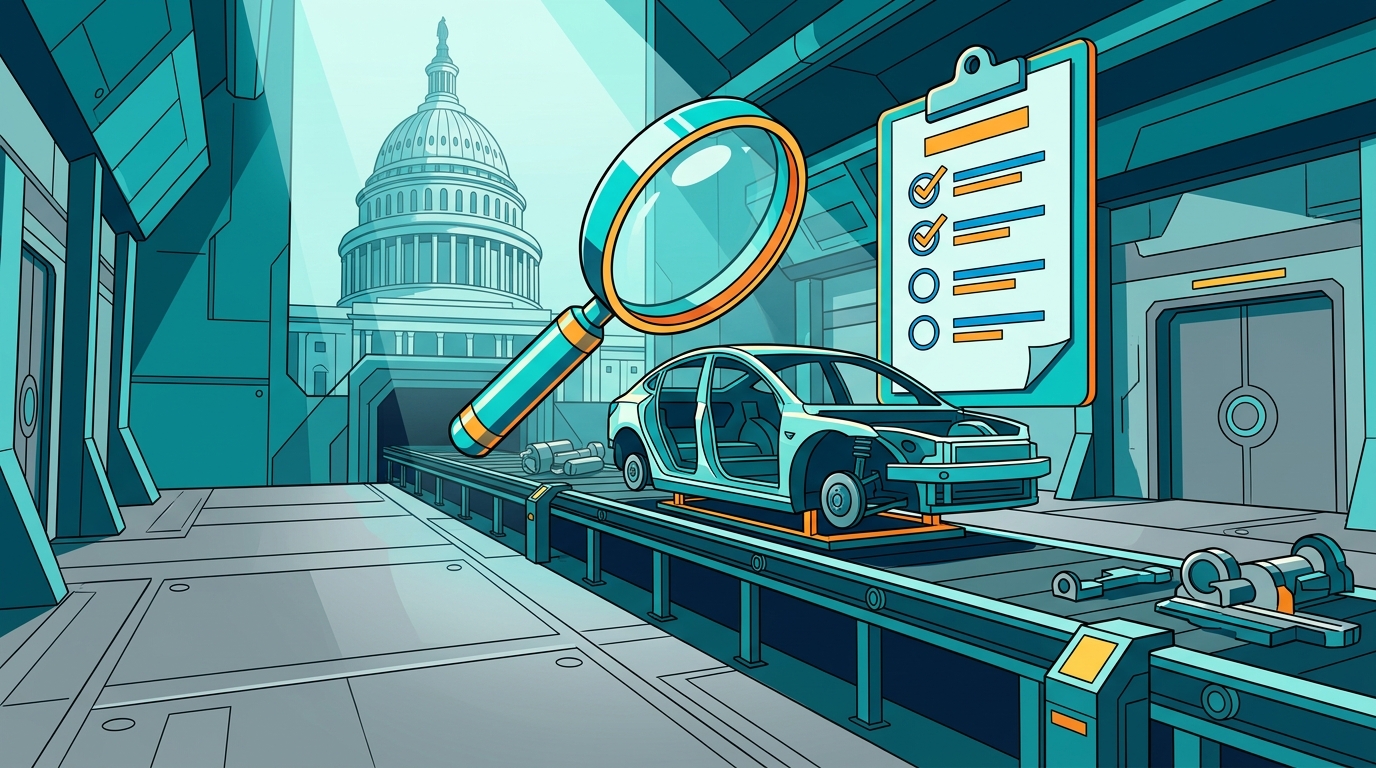
August 28 brought a new bipartisan push to audit foreign reach into American carmaking. Tennessee Republican Diana Harshbarger and Michigan Democrat Debbie Dingell filed the Automotive National and Economic Security Act of 2026. Its mandate is a Commerce Department investigation of companies with ties to foreign adversaries across the US auto sector.
The bill, H.R. 10158, reaches far beyond finished cars. The mandated report would examine foreign ownership and state-directed investment in US automakers, plus partnerships, joint ventures and technology transfers. The commerce secretary must weigh effects on national security, competitiveness and intellectual property, then hand findings to Congress.
Sponsors framed the measure around China, though the text applies to any country Washington classifies as a foreign adversary. Harshbarger pointed to Beijing’s playbook on critical minerals, shipbuilding and batteries as a preview of its auto ambitions. She said the shift to software-driven, connected vehicles turns the economic contest into a data-security problem for every driver.
The bill lands in a crowded field of China-focused auto measures. The Senate’s Connected Vehicle Security Act cleared committee in July with a floor vote pending, Commerce has already barred Chinese-connected vehicles under its 2024 rule, and federal researchers are testing Chinese lidar at Idaho National Laboratory. This measure adds an evidence-gathering layer, giving Congress a documented basis for whatever comes next.
For automakers, the practical effect is more scrutiny of supply chains that already run deep into Chinese components, plus a reminder that connected car data keeps climbing the national security agenda.