CarThreat
  • Home
  • News
  • Features
  • Spotlight
  • Events
  • About
    • Our Mission
    • Services
    • Contact
Notification
  • Autonomous Driving
  • Automotive Ethernet
  • BMS
  • ECU
  • EV
  • ISO/SAE 21434
  • Infotainment
  • OTA Updates
  • OBD-II
  • Pwn2Own
  • RCE
  • SDVs
  • TCU
  • UNECE R155
India's two-part cyber rulebook now has a certification trail
Cybersecurity

India’s two-part cyber rulebook now has a certification trail

Colmobil shuts some counters after intruders reach its network
Cybersecurity

Colmobil shuts some counters after intruders reach its network

A supplier flaw handed car buyers' payment records to criminals
Cybersecurity

A supplier flaw handed car buyers’ payment records to criminals

Physical Security

Rental cars stored video of Norwegian troops and gate codes

Font ResizerAa
CarThreatCarThreat
  • Home
  • News
  • Features
  • Spotlight
  • Events
  • About
Search
  • Home
  • News
  • Features
  • Spotlight
  • Events
  • About
    • Our Mission
    • Services
    • Contact
Sign In Sign In
Follow US
© 2026 Carthreat.com. All right reserved.
Cybersecurity

$60 mirror can make self-driving cars brake for ghosts

Researchers showed that a cheap household mirror can create phantom obstacles or hide real ones from a self-driving car's LiDAR, triggering emergency braking.

CarThreat Staff
Last updated: August 10, 2026 9:24 pm
By
ctadmin
2 Min Read
SHARE

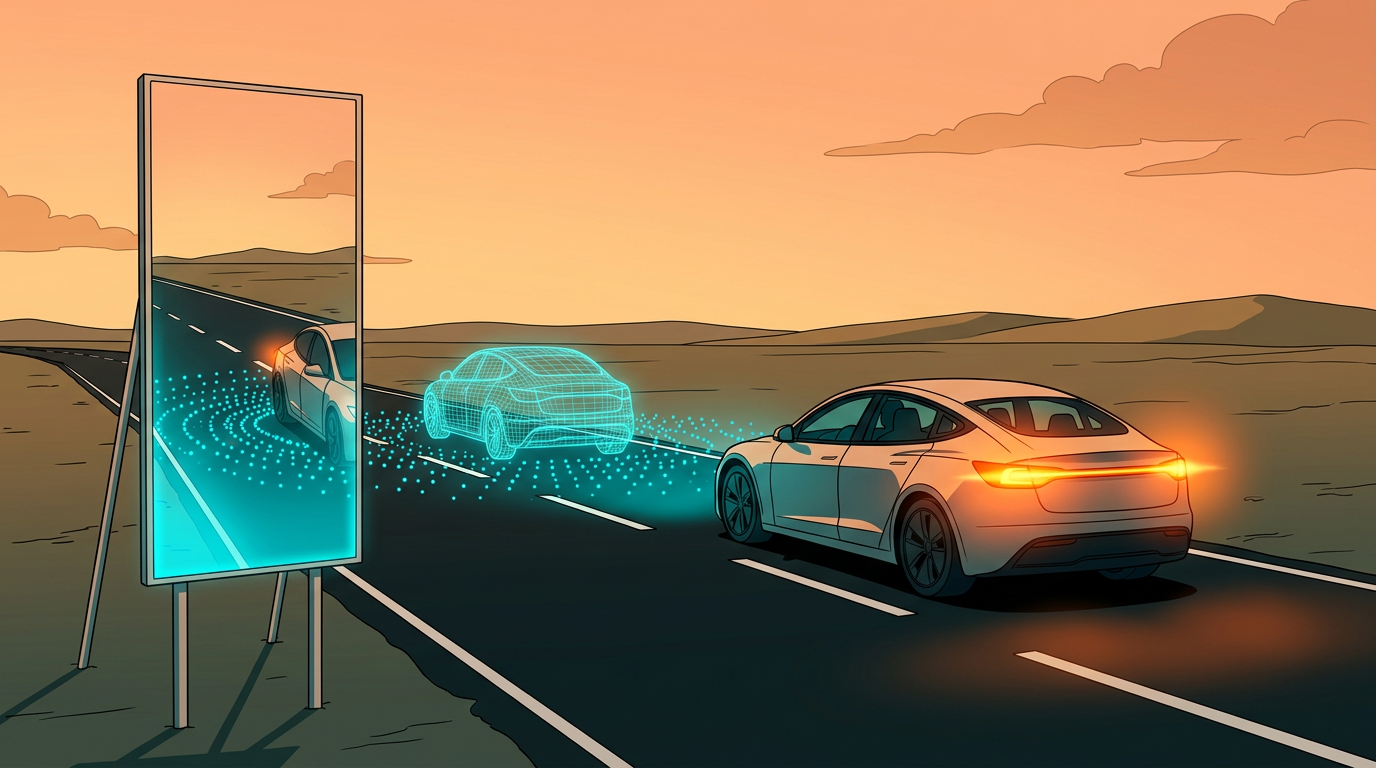
Everyday mirrors can hijack the eyes of a self-driving car. A collaboration led by the University of Luxembourg’s SnT center, with CISPA and several partners, demonstrated the effect on a full Autoware-based autonomous stack, where reflections produced phantom obstacles and hid genuine ones.

Two failure modes emerged from the analysis. In one, multi-path reflections cause the LiDAR to see objects that do not exist. In the other, deflected beams make real objects vanish from the point cloud. Both propagated through the full perception, planning, and control pipeline, ending in emergency braking and pile-up style collisions.

The team found that a mirror of 0.18 square meters, purchasable for under $60, could trigger high-confidence false detections, with phantoms classified as vehicles in 74 percent of trials. They also produced physics-informed models that predict artifact position, point count, and appearance odds from distance, angle, and mirror area, then folded those models into a CARLA-based injection framework for real-time simulation.

Specular reflections are absent from most current simulators, so validation pipelines can ship vehicles that never encountered mirror scenarios. The authors concede that defending against physically legitimate but geometrically deceptive inputs remains unsolved.

Glass storefronts, truck bodies, and building facades make such surfaces common in cities, adding urgency as automated driving pushes into dense urban environments. The paper was presented at VehicleSec ’26 this week.
Join Our Newsletter
Subscribe to our newsletter to get our newest articles instantly!
TAGGED:ADAS/autonomous driving software flawsAutonomous DrivingCybersecurityResearchVehicle SoftwareVulnerabilities
SOURCES:USENIX VehicleSec '26
Share This Article
Facebook Email Copy Link

Follow US

Find US on Social Medias
FacebookLike
XFollow
YoutubeSubscribe

You Might Also Like

Policy & Compliance

Oklahoma judge finds a Flock lookup breached the Fourth Amendment

By
ctadmin
October 4, 2026
Car NewsCybersecurity

Pwn2Own automotive 2026 exposes NFC charger and USB infotainment risks

By
ctadmin
July 18, 2026
Cybersecurity

Car eSIMs get a security stamp built to last a decade

By
ctadmin
September 24, 2026
Cybersecurity

Sharing camera feeds between cars opens up spoofing avenues

By
ctadmin
August 13, 2026
Policy & Compliance

Australia weighs UN cyber rules as car data rights expand

By
ctadmin
August 18, 2026
CybersecurityElectric Vehicles

CISA flags four flaws in Monta’s charging platform

By
ctadmin
October 4, 2026

CarThreat

Intelligence for the EV and automotive security market
  • News
  • Features
  • Spotlight
  • Events
  • About Carthreat
  • Our Mission
  • Services
  • Contact Us
  • OBD-II
  • Automotive Ethernet
  • TCU
  • Infotainment Systems
  • SDVs
  • BMS
  • ECU Security
  • CAN Bus
  • OTA Updates
  • Vulnerabilities
  • Relay Attacks
  • RCE
  • Threat Intelligence
  • Cybersecurity
  • Digital Keys
  • Bluetooth Security
  • ISO/SAE 21434
  • UNECE R155
  • Regulations
  • Data Privacy
  • EVs
  • Autonomous Driving
  • Pwn2Own Automotive

© 2026 Carthreat.com. All right reserved.  Privacy Policy | Legal

Welcome Back!

Sign in to your account

Username or Email Address
Password

Lost your password?